|
The Third Day |
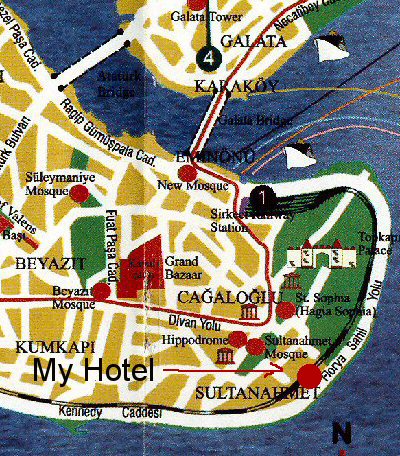
The third day was "Museum Day." And, it was still snowing! I left the tripod at home and visited Hagia Sophia, the Archeological Museum and the Topkepi Palace Museum. I was nearly the first one in at Sophia. (15 YTL admission) It's old, it's big, and there's nothing inside but walls -- not a display case, not a stick of furniture. I came, I saw, I shot pictures, and I left.
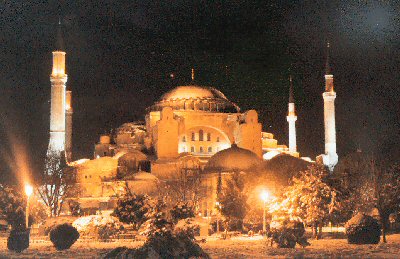 |
The Hagia Sophia at night. This was first a Christian Church -- one of the first Christian churches. It was an inspiration for the Blue Mosque. |
 |
The upper halls. |
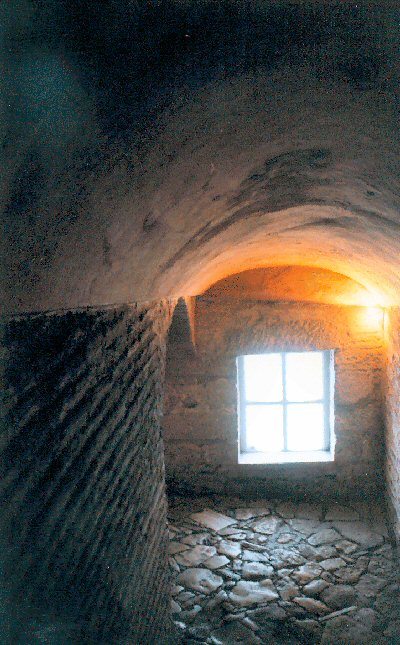 |
Curiously, there are no stairs to the upper halls. Instead, this well-worn rampway that winds around some kind of earthen tower is the only way to the upper levels. Either the building designers of the time (sixth century) did not have good stair designs for buildings, or this is some sort of early anti-earthquake measure. |
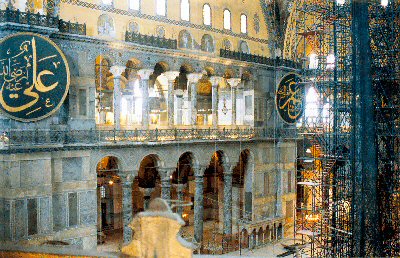 |
The main hall as seen from the upper gallery. The green- and gold- disks are from the mosque era and written in Arabic. On the right is a scaffold being used for ceiling restoration. |
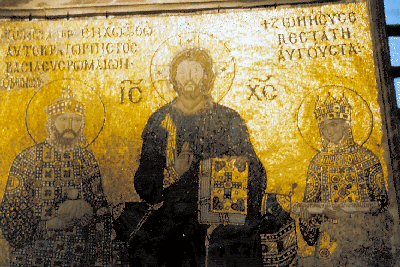 |
There is no furniture in the building. There is little but walls on the inside these days. On some of the walls, however, are neat mosaics, such as this one. |
 |
Window arches. |
When I finished in Hagia Sophia I walked down the hill headed for the Topkepi Palace, but found I was walking by the Archeological Museum, so I went there, first. (5 YTL admission) There was signage, but it was sparse. It was basically a collection of marble statues from Greek through Roman era.
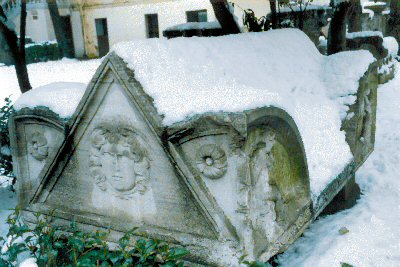 |
Some of the collection was indoors, and some was outdoors. It was a bit stange looking at snow-covered Ancient Greek stonework. |
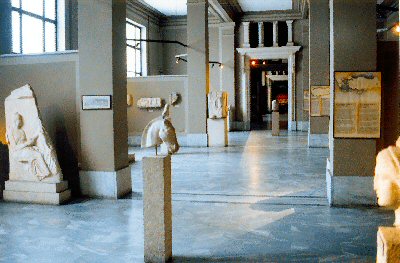 |
This was more typical. |
 |
|
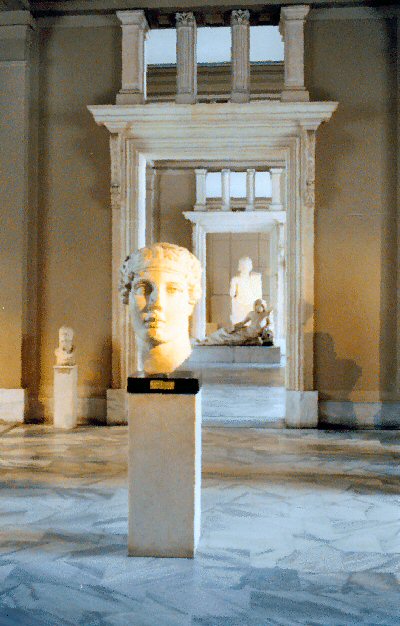 |
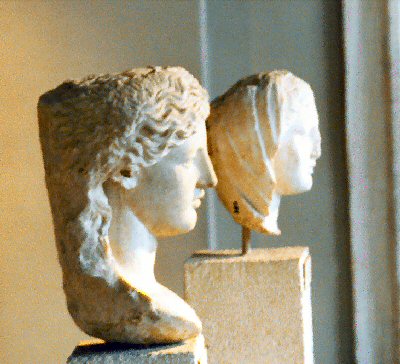
The museum did a nice job of presenting these pieces. |
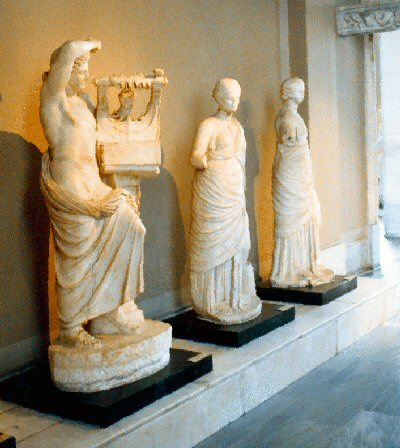 |
It was here I saw some of my first Turkish women. They were art students sketching these statues. |
The highlight for me was the sarcophagus of Alexander the Great. Yeah!! And it's in mint condition, too! (Much better than the movie.)
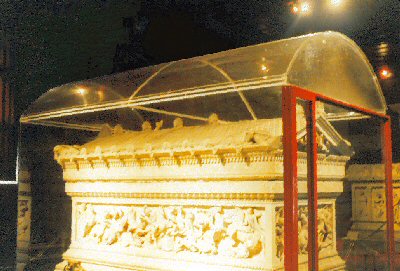 |
Here it is, folks. The last resting place (so far) of Alexander the Great. |
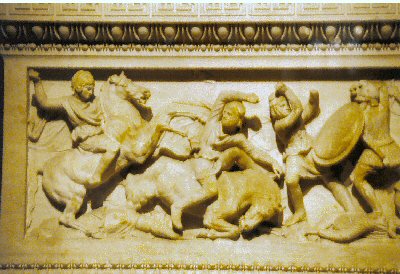 |
This sarcophogus is in great shape! Consider that this is over 2000 years
old, and most of the arms on this bas-relief are still attached. (That's
Alexander on the left, kicking Persian butt.)
It's been well taken care of for a long, long time. |
On to the Topkapi Palace (not to be confused with the Topkapi district). The Topkapi is a big place (several sections, each about 10 YTL admission). It was the headquarters for the first Sultans ruling after Constantinople was captured. Later Sultans built even richer palaces "up river" (north up the Bosporus) and Topkapi was abandoned for a while, then made into a museum. I only saw part of it before my energy gave out.
The highlight of what I saw was hairs from Mohammed's Beard! Mecca may be the religious center of Islam, but Istanbul was long the military and financial center, and many relics flowed to the money. Along with Mohammed's beardhairs, I saw his sword, the swords of the first four Caliphs (Arab rulers) to follow him, and other Mohammed parts. These were not photographable, and they had their very own religious person to watch over them and chant prayers. (I'm not sure if the person was always there, or if it was prayer time and that's why he was there.)
There was also a small, but nice, armor and weapons display. Now that I've seen this collection, I would say Ottoman armor inspired the Numenorian armor in Lord of the Rings.
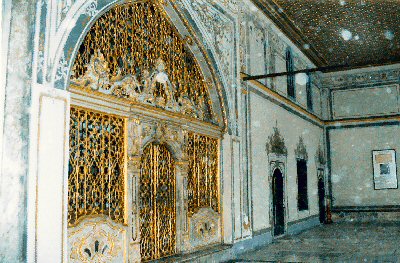 |
The fancy guilded door to a government meeting room. |
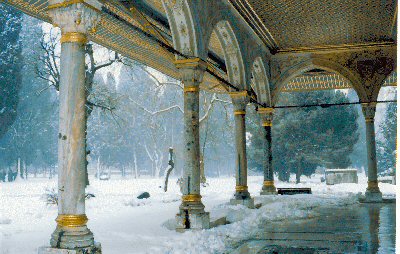 |
Looking out from the fancy meeting door on to the main palace courtyard. |
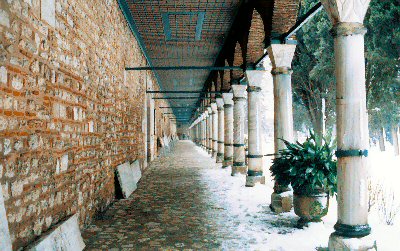 |
The "kitchen side" of the main courtyard. The stones leaning up against the walls are covered with Arabic inscriptions. |
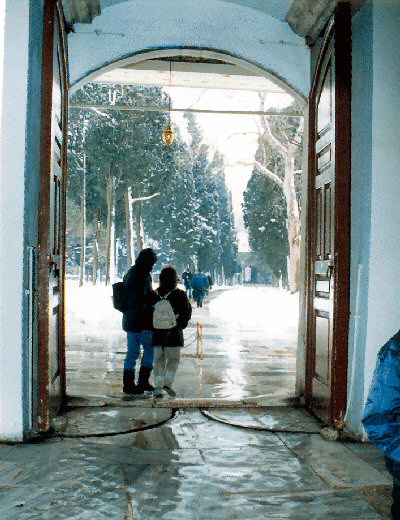 |
In Tolkien's words, "Fine Numenorian technology makes it so these
tall doors open easily." In this case, the iron tracks on the floor
take much of the load off the hinges so the doors will open and shut more
easily.
Note the heavy wear on these floors. |
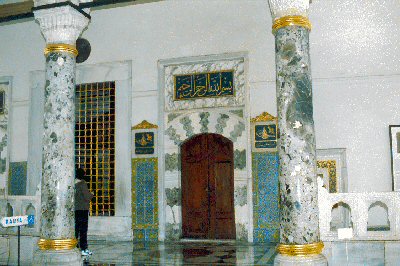 |
A building in the Inner Palace grounds. In spite of the buildings' opulence, this palace was abandonned by the fourth ruler (sultan), who needed something even fancier. |
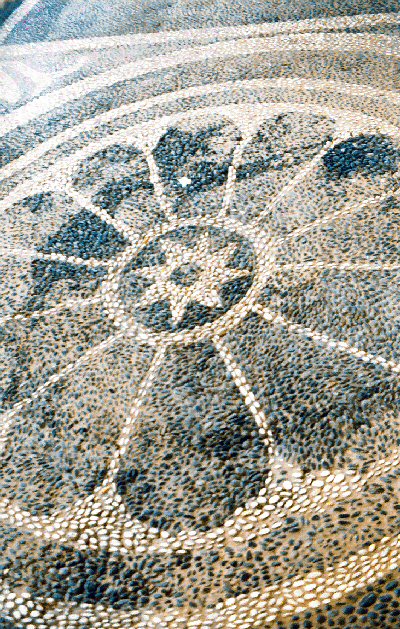 |
A patterned floor. |
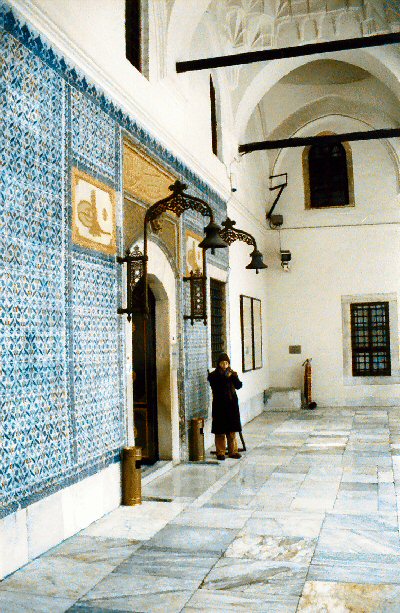 |
The home of Mohammed's Beardhairs... and other very sacred Moslem relics such as the swords of Mohammed and the first four Caliphs. Mecca is the religious center of Islam, but Istanbul has been the military and financial center for many, many years. It has collected its fair share of relics, too. |
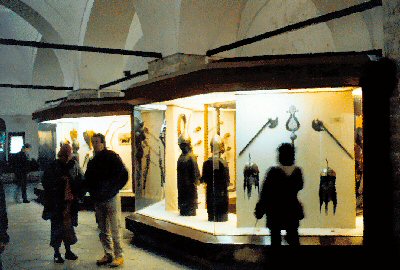 |
The weapons museum. |
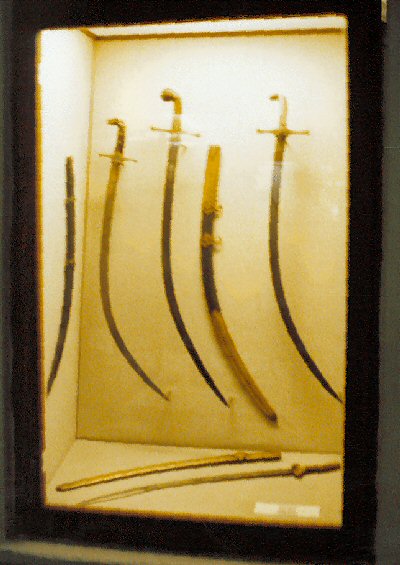 |
Persian swords (very curved). |
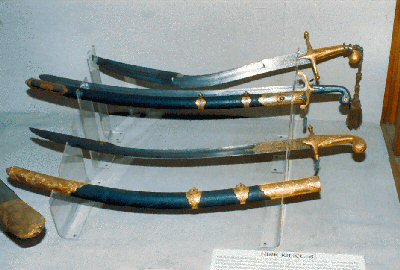 |
Turkish swords (not so curved). |
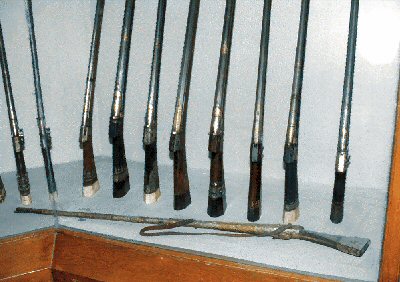 |
Tower guns. These were not meant for field work. They are heavily inlaid. (See the next picture.) |
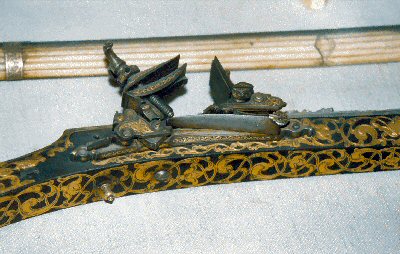 |
The Ottomans liked inlay on their hand artillery. |
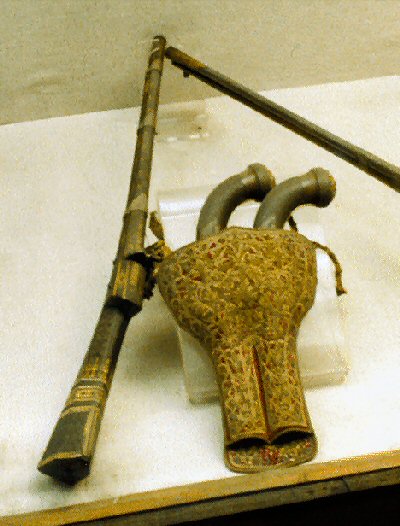 |
This is a pistol holster. |
As my energy gave out at Topkapi, the snow fell even harder -- I took a cab back... and didn't get overcharged! Whoa!
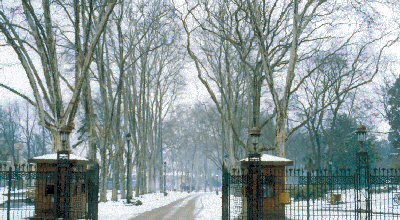 |
A road to a residential area next to the Topkapi Palace. |
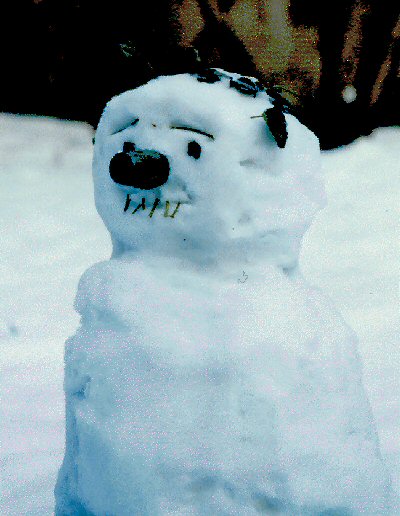 |
A Turkish snowman. There were many the week I was there. |
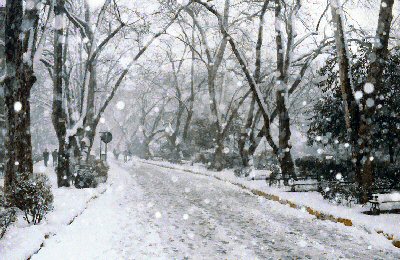 |
Leaving the Topkapi Palace. Snow, snow, snow! |
I had most of my meals at the hotel -- there was plenty traditional and contemporary Turkish to eat there. I didn't take my computer, and I was worried. What was I going to do when I wasn't sightseeing? Well, I found I could keep plenty busy writing in a notebook. That's how I kept busy without the computer. And busy I stayed: 37 pages written by the time the trip ended. |